



You will find the ingredient list on the pack, after the word “Ingredients”, with each substance under its INCI name. The order is set by EU law, but it will not tell you how much of an ingredient there is or what it does. To check an unfamiliar name, look it up in CosIng, the European Commission’s database of cosmetic ingredients.
In short
- If the jar carries no ingredient list, check the box it came in.
- An ingredient’s position in the list shows neither its share of the product nor what the product will do.
- To check an ingredient’s functions, search CosIng for its INCI name.
What is INCI, and where do you find it on the pack?
INCI is the International Nomenclature of Cosmetic Ingredients. Regulation (EC) No 1223/2009, the EU law on cosmetic products, requires the ingredient list to use common names from a glossary compiled by the European Commission. When compiling it, the Commission takes international nomenclatures into account, INCI among them. Some other details on the label, such as precautions for use, follow the language rules of the country where the product is sold; the list itself uses the glossary names.
On the pack, the list comes after the word “Ingredients”. The law allows it to appear on the outer packaging alone, so the jar itself does not have to carry it. Where even that is impossible for practical reasons, the list may be on a leaflet, label, tag or card supplied with the product.
The ingredient lists quoted in this article were taken from our product pages on 29 October 2026. Under each list, those pages note that the composition may change from time to time and that the pack shows the current one.
What does the order of ingredients tell you, and what doesn’t it?
Article 19(1)(g) of Regulation 1223/2009 sets the order: by weight at the time each ingredient is added to the product, from the largest amount down. Ingredients in concentrations below 1% may follow in any order after those above 1%.
A few groups have rules of their own. Perfume and aromatic compositions and their raw materials appear as one word, Parfum or Aroma, and nanomaterials are marked with the word nano in brackets after their name. Colourants, other than those meant to colour hair, may come after all the other ingredients, in any order, and are named by the CI (Colour Index) system where it applies.
Key point
The label does not show where the ingredients above 1% end, so an ingredient’s position in the list does not tell you its share of the product. Nor can you judge what the product will do from its position.
How do you find a familiar ingredient under its INCI name?
Look for the INCI name rather than the word printed on the front of the pack. Water is listed as Aqua, glycerine as Glycerin and perfume as Parfum. Some names add the familiar word in brackets: Simmondsia Chinensis (Jojoba) Seed Oil is jojoba seed oil.
On the product page of our Intensive moisturising 5K Penta-molecular face cream, freshwater green mud extract appears in the ingredient list as Limus (Freshwater Green Mud) Extract. CosIng gives this ingredient one function, skin conditioning.
In our two 3K creams, a peptide is listed under its INCI name, Palmitoyl Tripeptide-38.
Three hyaluronic acid names in one ingredient list
The 5K cream lists hyaluronic acid in three forms. Each form has its own INCI name and its own CosIng entry, and their sets of functions differ.
| Name on the list | What it is in plain words | CosIng function |
|---|---|---|
| Hydrolyzed Hyaluronic Acid | hyaluronic acid processed by hydrolysis | hair conditioning, humectant, skin conditioning |
| Sodium Hyaluronate | the sodium salt of hyaluronic acid | humectant, skin conditioning |
| Sodium Acetylated Hyaluronate | sodium hyaluronate, chemically modified (acetylated) | humectant |
The three entries describe three different substances. A longer set of functions does not make one of them better than another.
Tip
To spot hyaluronic acid in a list, look for “Hyaluron”: it is part of all three names, while only one of them contains “Hyaluronic Acid”.
How do you check an ingredient’s function in CosIng?
A CosIng entry lists an ingredient’s functions, such as humectant or perfuming. To find them:
- Take the name as written in the list.
- Search for it in the CosIng database. If the name has a note in brackets and the search finds nothing, search again without the note: CosIng lists Limus (Freshwater Green Mud) Extract as LIMUS EXTRACT.
- Open the entry and read its functions.
A function is the job an ingredient can do in a formula. It does not tell you what a particular cream will do on your skin.
An entry can also point to an annex of Regulation 1223/2009. The LINALOOL entry, for example, shows III/84, meaning entry 84 of Annex III, where conditions are set for that substance. The European Commission describes CosIng as having “informative purpose and no legal value”. Only the Regulation and its annexes decide whether, and under which conditions, a substance may be used in cosmetic products.
The article on face scrub vs enzyme peel runs the same check on another ingredient, the granules in the scrub.
How do you compare two ingredient lists?
Put the two lists side by side and read both down to the last name. A difference can turn up anywhere, including at the very end. If the same ingredient sits at a different place in each list, that does not show which product has more of it. Its place shows only where it stands among the other ingredients in that list, and neither list marks where the 1% threshold falls.
Take two of our creams with similar names, Anti-Age face lifting cream 3K multimolecular and Anti-Age face lifting cream 3K multimolecular MEN. Their lists begin with the same names. Among the differences, the MEN list has Parfum and ends with Limonene, Linalool and Hydroxycitronellal. In one other place, the two lists have different plant extract names.
Parfum stands for a perfume composition. All three names at the end have perfuming among their CosIng functions, and each has its own entry in Annex III. Under that annex, each must be named in the ingredient list, in addition to Parfum, when its concentration exceeds 0.001% in a leave-on product. In a rinse-off product, the threshold is 0.01%.
If scent matters to you, look for Parfum or Aroma in a list and check any unfamiliar names in CosIng, where perfuming may be among an ingredient’s functions.
The 5K and 3K creams are in the Face section. Open the Ingredients tab on the page of either cream and try these steps on a real list.
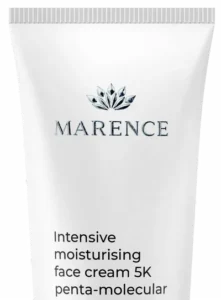
Intensive moisturising 5K Penta-molecular face cream, 75 ml
Original price was: 31.93€.19.16€Current price is: 19.16€.
Add to basket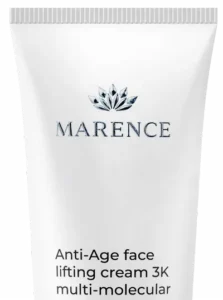
Anti-Age face lifting cream 3K multimolecular, 75 ml
Original price was: 39.97€.23.98€Current price is: 23.98€.
Add to basketThis article is for general information only and is not a substitute for advice from a doctor or pharmacist.