



The scalp often gets drier in winter, and it usually shows up as itching and small flakes. For a dry scalp, the American Academy of Dermatology (AAD) suggests switching to a gentle, non-medicated shampoo.
In short
- Cold weather and low humidity can dry out the scalp, and some shampoos can make the dryness worse by removing the scalp’s own oils.
- Dryness and dandruff are easy to confuse, and they need different care.
- An ingredient list names what is in a shampoo, not how gentle it will be.
Why the scalp gets drier in winter
Skin dries out when it loses too much water. In winter, cold, dry air adds to that, but the weather is not the whole story. Some shampoos remove the scalp’s own oils and can make dryness or irritation worse.
- Cold and dry air
- Skin loses too much water
- Some shampoos remove the scalp’s own oils
Key point
You cannot change the weather, but you can swap your usual shampoo for a gentler one.
Dry scalp or dandruff: why they are easy to confuse
Both can come with itching and flakes, so you cannot always tell them apart by the flakes alone. Dandruff causes white flakes of skin on the scalp and in the hair. The NHS says it is common, not harmful and not contagious, and that stress and cold weather may make it worse. Dandruff is not caused by poor hygiene, although it may be more obvious if you do not wash your hair regularly.
The right care depends on the cause. For dandruff, the NHS suggests using an anti-dandruff shampoo for up to four weeks to see whether it helps, and a pharmacist can explain how to use it.
Dry scalp
Itching and small flakes
- What can make it worse
- Cold, dry air and some shampoos
- Where to start
- A gentle, non-medicated shampoo (AAD)
Dandruff
White flakes of skin on the scalp and in the hair
- What can make it worse
- Stress and cold weather (NHS)
- Where to start
- Anti-dandruff shampoo for up to four weeks; a pharmacist can explain how to use it (NHS)
How to choose a shampoo when your scalp feels drier
- First, consider whether this looks like dryness rather than dandruff or irritation from a new product.
- For a dry scalp, or one that started to itch after a new shampoo, choose a gentle, non-medicated shampoo.
- If you know which ingredients your skin reacts to, look for them in the full ingredient list on the product page before you buy.
- Glycerin, panthenol or amino acids on the list are not a promise of results.
What a shampoo ingredient list can tell you
The ingredient list, or INCI list, shows which substances a shampoo contains, but not how much of each, or whether it will suit you. Under Article 19 of EU Regulation 1223/2009, ingredients are listed in descending order of weight, and those below 1% may appear in any order after the rest.
The EU’s CosIng database gives the functions of cosmetic ingredients. Glycerin is listed as a humectant, which holds moisture, and Panthenol for hair and skin conditioning.
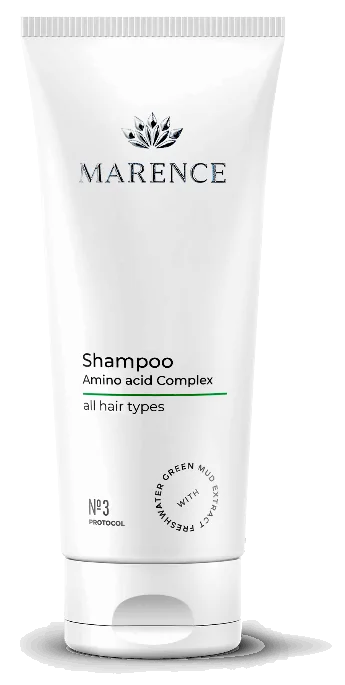
Function listed in CosIng
- 1 Sodium Lauroyl Methyl Isethionate, Cocamidopropyl Betaine and Sodium Cocoyl Isethionate: cleansing
- 2 Glycerin: humectant, holds moisture
- 3 Panthenol: hair and skin conditioning
- 4 Freshwater green mud extract, Limus (Freshwater Green Mud) extract: skin conditioning
Hair shampoo with amino acids, 200 ml
Important
An ingredient’s function is not the same as what the whole shampoo does.
How our amino acid shampoos differ
If you are choosing between our amino acid shampoos, start by comparing their ingredient lists. They are the Bloom Shampoo with amino acid complex (60 g; the 380 g size has the same INCI list) and the Hair shampoo with amino acids (200 ml).
 Bloom, 60 g and 380 g |  Amino acids, 200 ml | |
|---|---|---|
| First five after water | the same | the same |
| Amino acids | 11 amino acids, including arginine and glycine | the same 11 plus silk amino acids |
| Examples of other differences | Guar Hydroxypropyltrimonium Chloride | xanthan gum, citric acid |
After water (Aqua), both lists continue with the same five ingredients: Sodium Lauroyl Methyl Isethionate, Cocamidopropyl Betaine, Sodium Cocoyl Isethionate, Sodium Methyl Oleoyl Taurate and Glycerin. CosIng gives the first three a cleansing function. Both also contain our freshwater green mud extract, whose INCI name is Limus (Freshwater Green Mud) extract; CosIng lists it for skin conditioning. An INCI list alone cannot tell you which shampoo will feel more comfortable on your scalp.
Tip
Use any balm or mask you pair with your shampoo as directed on its product page. Oils or panthenol in the ingredients do not mean that a product is meant for the scalp.
When to see a doctor
The NHS advises seeing a GP if dandruff has not cleared after at least four weeks of anti-dandruff shampoo, if the dandruff is severe, if the scalp is very itchy, red or swollen, or if flaky, itchy patches appear on the face or body. Our shampoos are cosmetics, not a remedy for itching.
You will find shampoos, balms and masks in our hair care range. The ingredients quoted here match our product pages as of 22 October 2026; the current ingredient list is on the packaging.
This article is for general information only and is not a substitute for advice from a doctor or pharmacist.